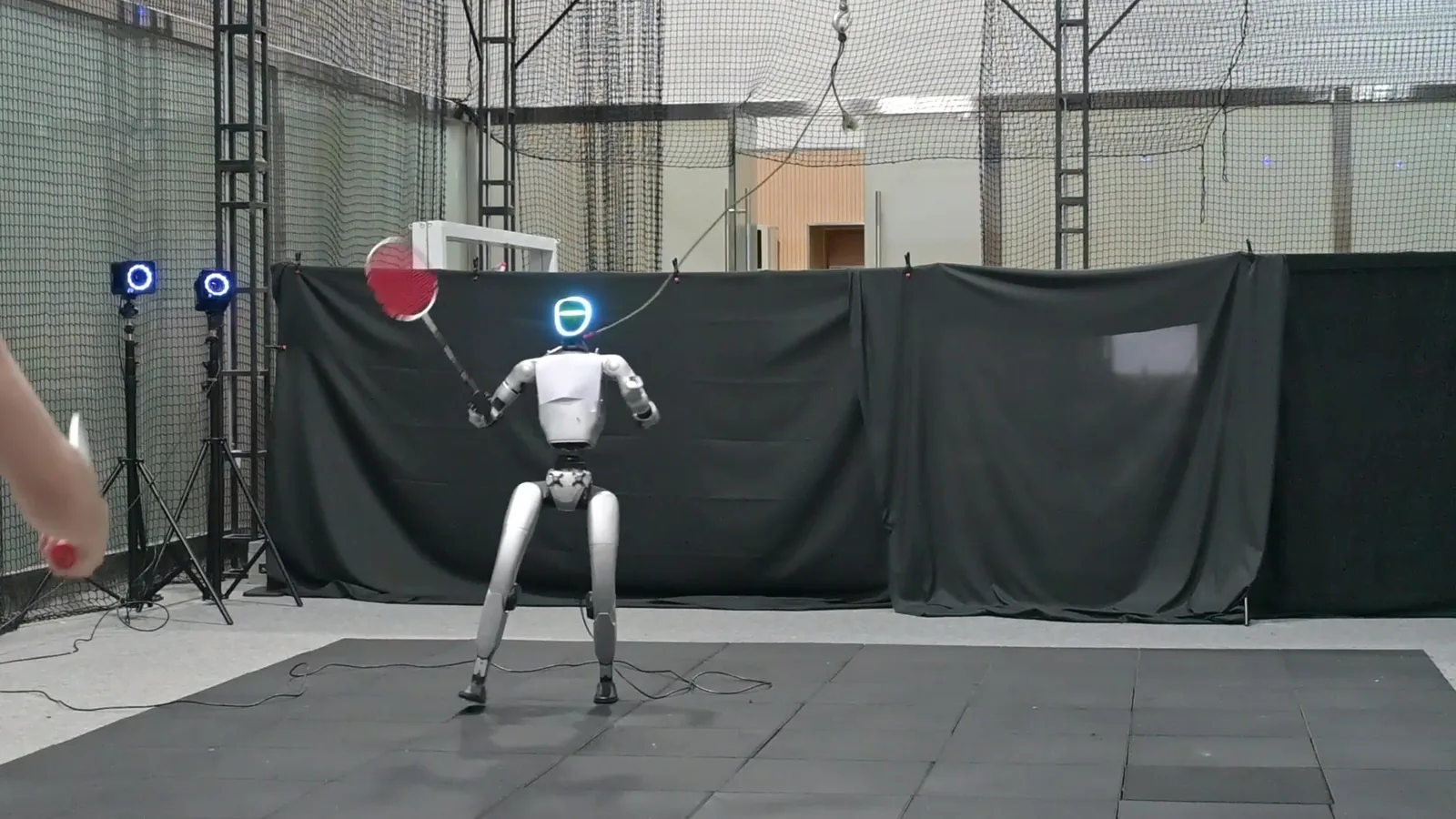
A humanoid robot learned badminton from about 30 minutes of video of people playing. Then, rallying with real people, it returned up to 23 shots in a row. The research comes from Tsinghua University, the Hong Kong Embodied AI Lab and 4 other institutions, and it was accepted at CoRL 2026, the Conference on Robot Learning.
Why a marketer should care. Robotics often hits a data problem before marketing does. This robot faces the same 3 problems as your marketing system: learn from a few examples, decide in real time, and stay natural while chasing a score. Each lesson below pairs what the paper found with why your system faces the same thing, and 1 thing to try. The robot facts come from the paper. The marketing side is our read, and it's labeled that way.

What the robot actually did
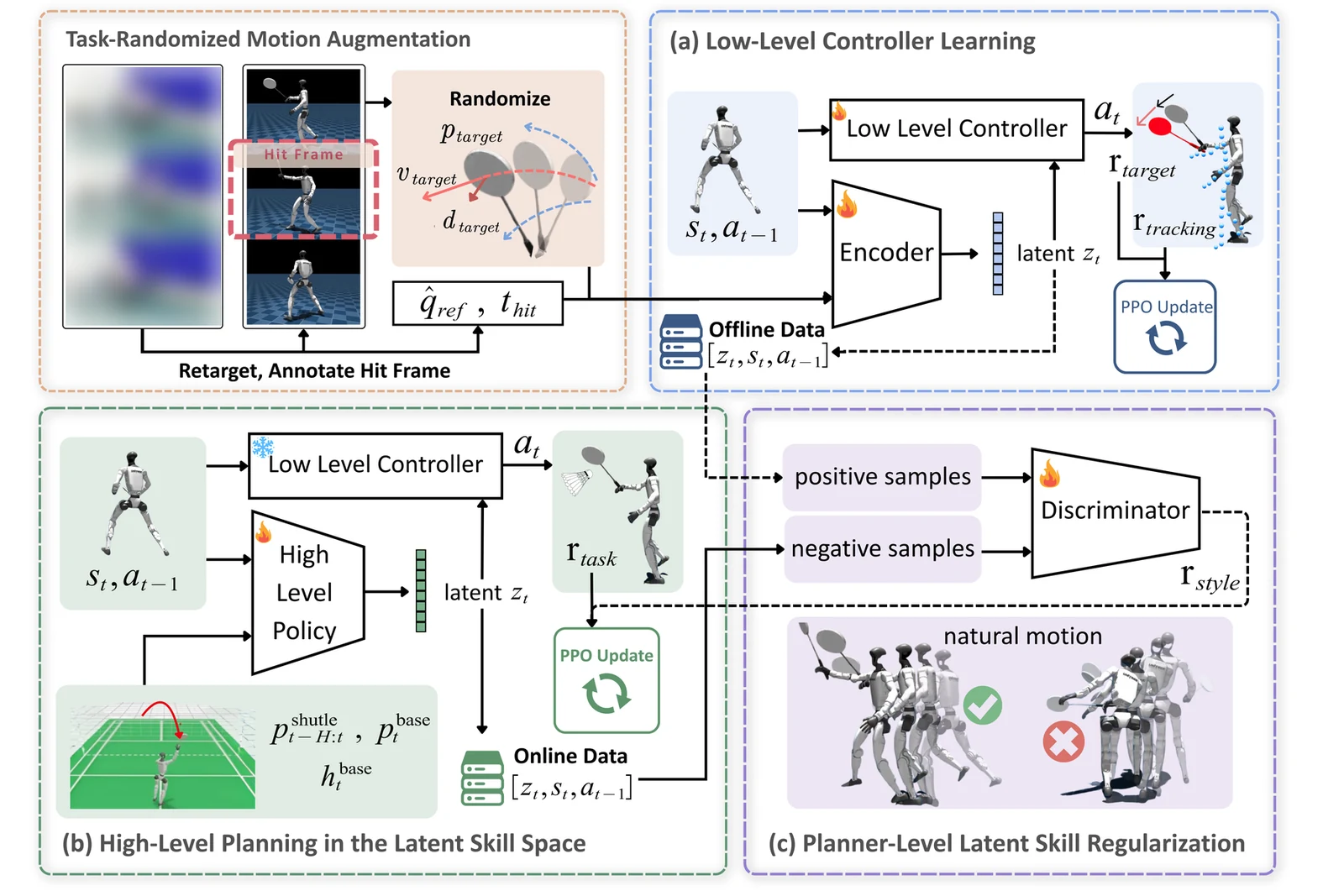
The robot is a Unitree G1 humanoid with 29 degrees of freedom, the joints it can move. The team rebuilt about 30 minutes of ordinary video of people playing into 3D motion and mapped it onto the robot's body. Then it trained in 3 stages:
- Stretch the few examples. Each recorded hit became a family of variations, each practiced until the robot could really execute it.
- Learn the strokes, then plan. The strokes were learned first and locked. A separate planner blends them on the fly, using the shuttle's 5 most recent positions and the robot's own state.
- Make it move naturally. A reward for natural motion was added last, once the robot could already play.
All of that training happened in simulation. Then the team put the result straight onto the real robot for 20 rallies with people. It returned 89.4% of its shots, averaged 8.42 returns in a row, and reached 23 at its best. Its misses and falls counted against it; the human's misses didn't. The net was removed for safety and so the motion-capture cameras could see.
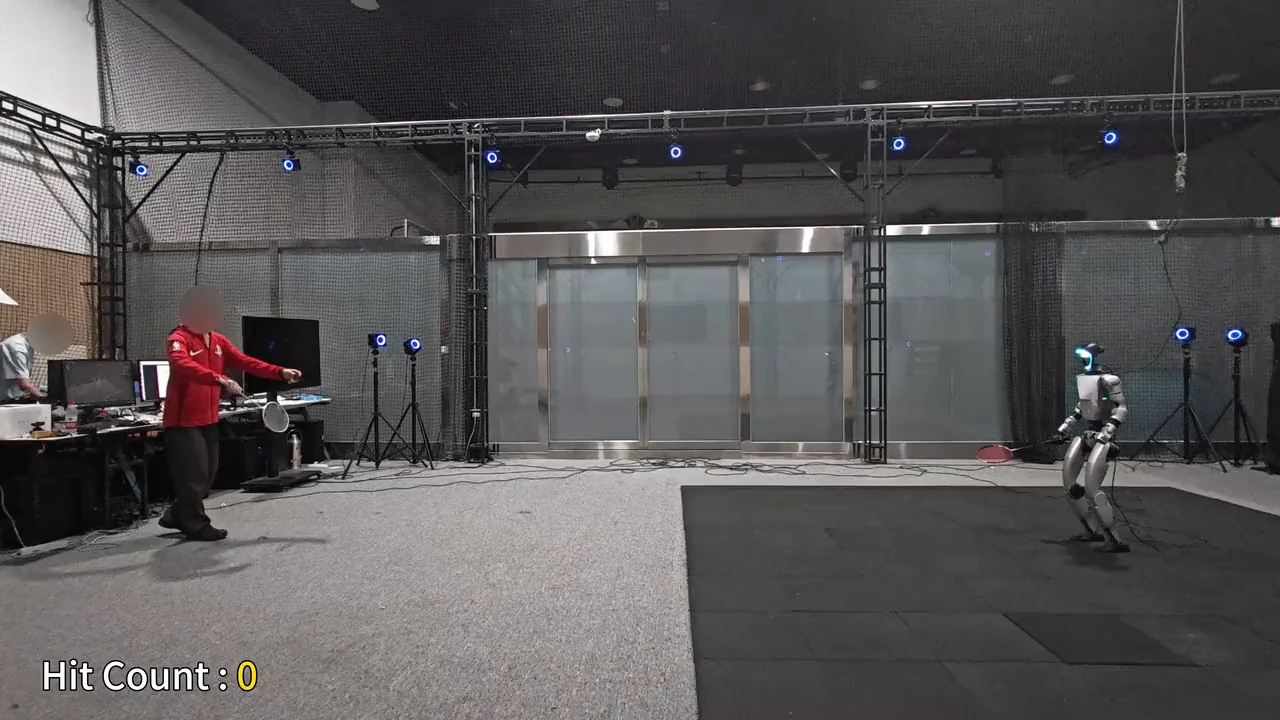
Watch the original rally video on the lab's project page
1. Your best ads are seeds
What the robot did. The team had only about 30 minutes of human video, so each recorded hit was stretched into a family of variations: new contact points, racket speeds and racket angles, each practiced until the robot could execute it. Without that step, success in simulation fell from 89.2% to 57.0%, and the robot never returned a backhand.
Why your system faces the same thing. Our read: you have a handful of proven ads, not thousands. The variation tools in your ad platforms stretch a few inputs into many versions, a similar move to the robot's.
Try this. Seed variation tools with your proven winners, not blank prompts. Then check that each new version still looks like something you'd run.
2. Approve the parts, let the system mix
What the robot did. Its strokes were learned from the human video and locked first. Then a separate planner blends them on the fly. The paper says the planner "does not simply select fixed categorical skill codes, but instead continuously specializes its latent command according to the incoming shuttle and robot context."
Why your system faces the same thing. Our read: Google's responsive search ads and Performance Max already mix and match your headlines, descriptions and images. You stop writing the final ad. You write the parts.
Try this. Read every headline and image on its own, and ask: would I approve this next to any of the others?
3. Chase only the score and it gets ugly
What the robot did. A version trained only to return the shuttle, with no human motion to learn from, returned 79.0% of shots in simulation. It had the jerkiest, most effortful motion of the 3 methods compared, and it never returned a forehand.
Why your system faces the same thing. Our read: a system told only "lower my CPA" can find ugly shortcuts too, like clickbait ads, cheap placements and leads that never buy.
Try this. Give the system a brand check, not just a target: approved assets, exclusions, and a conversion goal that measures value, not just volume.
4. Add that brand check after it learns
What the robot did. In simulation, adding the natural-motion reward from the first day of planner training dropped success to 55.9%, and the robot stopped returning backhands. Added once the planner could already play, it cost under 1 point of success (89.2% to 88.3%) and made the motion 16% less jerky.
Why your system faces the same thing. Our read: every rule piled on at launch can starve the learning, whether it's too many exclusions, audiences that are too narrow, or too few assets. Added too late, rules arrive after bad habits have scaled.
Try this. Launch with approved parts and only the rules you can't live without. Tighten the rest before you raise the budget.
5. Keep more than 1 winning ad
What the robot did. A rival method scored 84.6% in simulation, a strong number, but it never returned a backhand. It covered the gap by leaning on forehands and jumps.
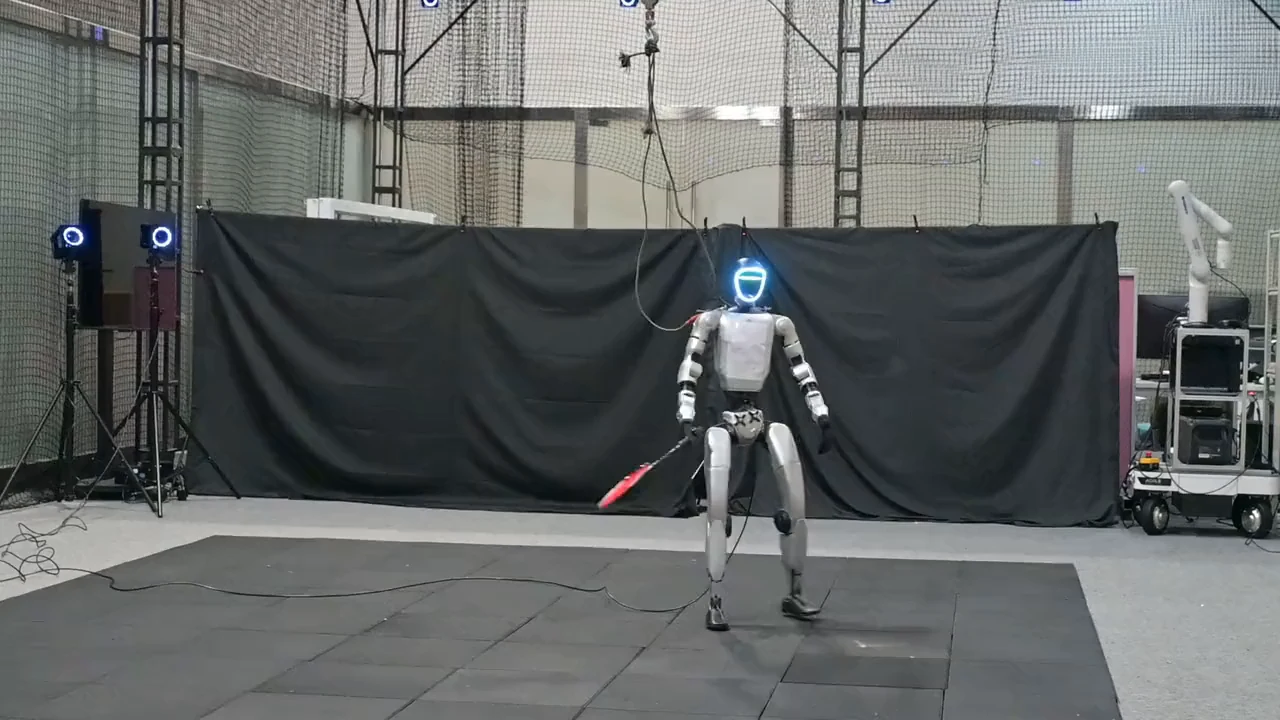
Watch the original backhand video on the lab's project page
Why your system faces the same thing. Our read: ad algorithms tend to pile spend onto 1 winning ad. A strong average can hide the customers that ad never wins.
Try this. Keep 2 or 3 strong ads live in each ad group or asset group, and check results by audience, not just the average.
6. Rehearse, but vary the rehearsal
What the robot did. It practiced only in simulation, on randomly launched shuttles. Put straight onto the real robot, it returned 89.4% of its shots in 20 rallies with people.
Why your system faces the same thing. Our read: expect simulated buyers, models built to stand in for your customers, to pre-test campaigns before money moves. A rehearsal that only replays your best guess proves little.
Try this. When you test messages, vary the audience, the season and the price, not just the headline.
7. Your tracking sets the ceiling
What the robot did. It sees the shuttle only through a motion-capture system, cameras around the room that track the shuttle and the robot. The paper lists this as a limit, because it restricts the system "to instrumented environments."
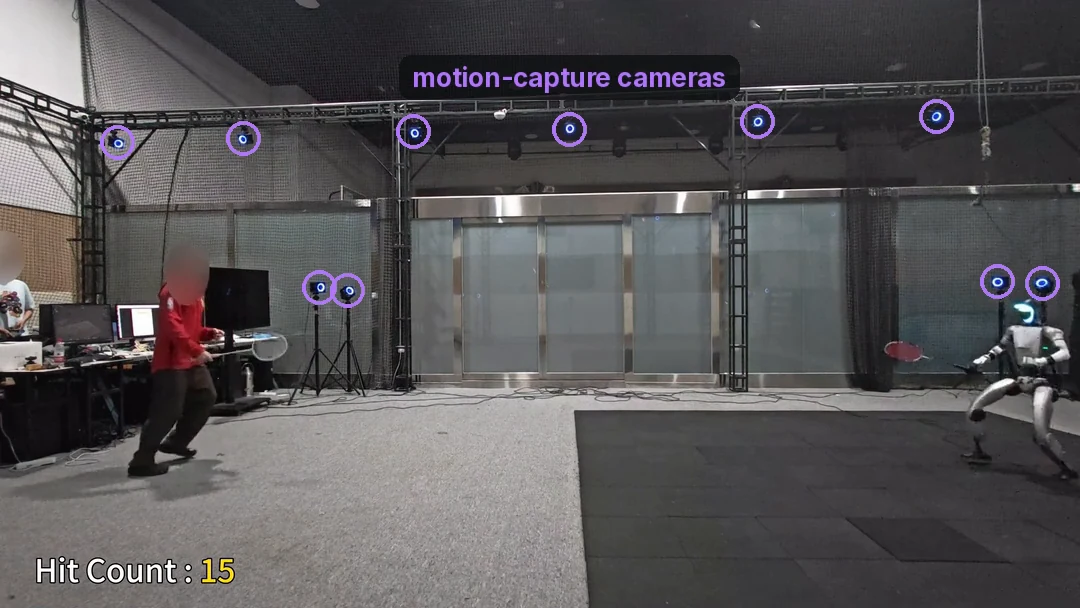
Why your system faces the same thing. Our read: automated bidding sees results only through your conversion tracking. With weak data, it swings at a shuttle it can't see.
Try this. Before you buy more automation, check that every sale and qualified lead reports back to your ad platforms, with its value.
The limit that matters most: it can't aim
The paper says the robot "does not explicitly control the shuttle landing location," so "it cannot yet perform strategic shot placement." It keeps the rally going, but it can't choose where the shot lands, and that's how points are won.
Your marketing system has the same gap. It can execute all day. You choose the customer, the offer and the margin.
Aim first. Then let it rally.
What the paper doesn't show
- Most of the numbers come from simulation. The real-world test was 20 rallies, with the net removed and the motion-capture cameras running.
- The paper measures "natural" motion against the team's own reference, a score called JFID, which it calls "a complementary metric rather than a method-agnostic measure." That's why we quote the jerk number instead.
- The marketing lessons are our read. The paper is about robots, and it makes no claims about advertising.
Sources
- Jingzhi Cui and 11 coauthors, "Humanoid Badminton: Learning Dynamic Racket Skills from Limited Human Motion Data," arXiv 2609.31840, submitted September 25, 2026, accepted at CoRL 2026. Licensed CC BY 4.0: https://arxiv.org/abs/2609.31840
- The project page, with all of the lab's videos: https://sunlight02.github.io/humanoid-badminton/
Working out where AI actually fits in your marketing?
I write these while building the systems behind them: measurement, creative pipelines, and agents that do real work. Connect on LinkedIn and tell me what you are working on. That is where these conversations start.
Connect on LinkedIn